Note: System upgraded on 10th July 2017. If you've already registered prior to the upgrade, please login using your existing username and password. Thank you.
The starting point for research conducted at the Living Lab is the natural environment. The Living Lab engages in joint research with national and international scientists within a range of sustainability-related areas.We view sustainability in a holistic fashion, considering environment, humanity and economy as the three primary variables to be taken into account as we work toward a more sustainable future for Malaysia and the world.
Living Lab projects are applied to solving real-world problems, and research results are analyzed in order to see how our findings can help usher in changes in the relationship between the human community, human economic activities and the natural environment.
What types of research may be carried out through the Living Lab?
Any environment-related project which has been designed in accordance with the requirements listed below can be proposed as a Living Lab Project
Requirements:
All projects should be applicable toward the sustainability, the enhancement and/or the restoration of one or more aspects of the natural environment. Where possible, the researcher should try to contribute to the creation of sustainable economic opportunities, capacity building and/or other benefits for the local community.
Below are some sample areas in which you may wish to conduct research through the Living Lab:
* Botany- plants
* Zoology- animals
* Hydrology- water
* Entomology- insects
* Herpetology-reptiles & amphibians
* Biochemistry- chemical composition of living beings
* Bio-intensive organic agriculture
* Sustainable forestry
* Permaculture
* Soil quality studies
* Sustainable resource management
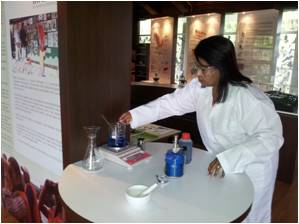
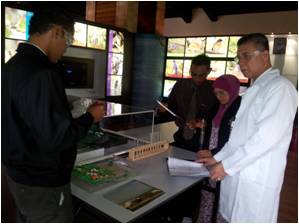
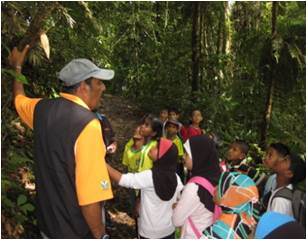
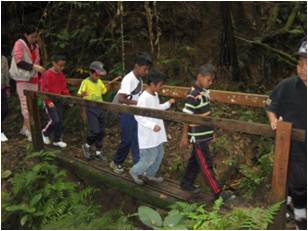
We provide hands on experiences in the sustainability sciences for children of all ages. They begin with in-the-field empirical observation.
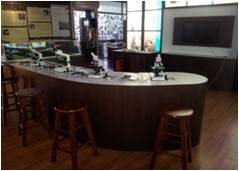
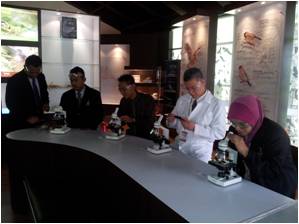
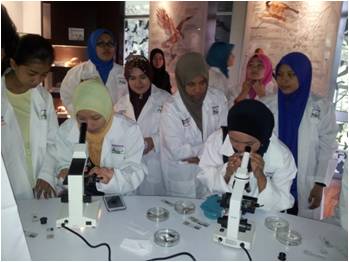
Upon returning to the Lab, participants conduct simple hydrological, soils and Biochemistry tests, as well as studying specimens of flora and fauna at the microscopic level, similar to those observed during the field work activity.
The Living Lab also is the Centre for Dialogue and Transformation.
The Centre for Dialogue & Transformation
offers services in the following areas:
*Sustainable economic development research and application
*Training and development for sustainable small-scale businesses


.jpg)