
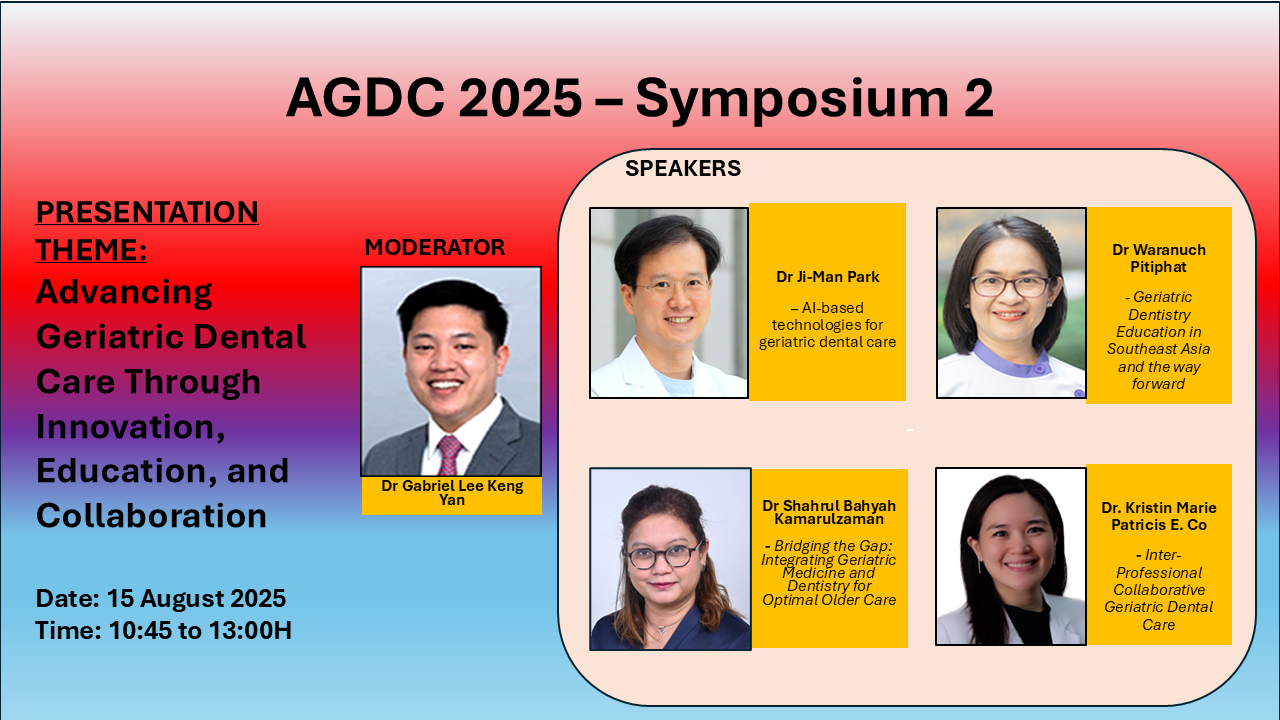
Symposium 2 -
Advancing Geriatric Dental Care Through Innovation, Education, and Collaboration
Ji Man Park
Ji-Man Park graduated from Seoul National University in 2002. He trained at the department of prosthodontics, Seoul National University Dental Hospital. He gained Ph. D and Master’s degree at Seoul National University. He started working as an assistant professor at Ewha Womans University in 2009 and did his best on dental treatment, research and education until 2015. He was a clinical associate professor at Seoul National University Gwanak Dental Hospital from 2015 to 2017. He was an associate professor and professor at Yonsei University, College of Dentistry from 2017 to 2021. He has been an associate professor and professor at Seoul National University, School of Dentistry. He has studied digital dentistry and the clinical application of intraoral scanners and 3D printers. He also has worked on government research projects, "Standardization of evaluation protocol for the performance comparison of digital intraoral scanners”, “Development of 3D printable ceramic material and associated printer”, and "Robotic system for implant surgery". Ji-Man Park is an active member of IADDM (International Academy of Digital Dental Medicine), IADR, AO, AAP, and works as an Editor-in-Chief of the Journal of implantology and applied sciences (JIAS).
Lecture Topic: AI-based technologies for geriatric dental care
The integration of artificial intelligence (AI) into dentistry is revolutionizing care for geriatric patients, offering innovative solutions to address the unique challenges posed by aging populations. This lecture emphasizes the role of AI-based technologies in enhancing digital workflows for geriatric dental care, highlighting the importance of established standards and scientific evidence in their effective implementation. The lecture will explore how internationally recognized standards for CAD/CAM systems ensure accuracy, compatibility, and reliability, facilitating the seamless integration of AI-driven tools into clinical practice. Key developments in intraoral scanners, AI-assisted CAD software, and material sciences will be discussed, demonstrating how these technologies improve efficiency and precision in diagnostics, treatment planning, and prosthesis fabrication for older adults. Particular attention will be given to how standardized protocols enable better communication and data sharing within dental teams, ultimately leading to consistent and predictable treatment outcomes. Clinical case studies will illustrate how AI-powered tools and workflows enhance esthetics, functionality, and patient satisfaction in geriatric care, addressing common issues such as edentulism, reduced manual dexterity, and complex oral health needs. By examining the application of AI in geriatric dentistry, this lecture aims to provide actionable insights for leveraging digital technologies to improve care outcomes and quality of life for elderly patients.
Waranuch Pitiphat
Dr. Waranuch Pitiphat is the current President of the Southeast Asia Association for Dental Education (SEAADE) and an accomplished epidemiologist and Dental Public Health Specialist at Khon Kaen University, Thailand, where she previously served as Dean of the Faculty of Dentistry. She earned her DDS from Chulalongkorn University, an MPHM from Mahidol University, and an MSc and ScD in Epidemiology from Harvard University. Dr. Pitiphat is a Past President of the Asian Academy of Preventive Dentistry (AAPD) and the Thai Society of Public Health Dentistry. She also serves as a member of the Board of Directors at the DeRouen Center for Global Oral Health, University of Washington, USA. With over 100 peer-reviewed publications, she has made significant contributions to the field and serves on the editorial boards of leading journals, including the Journal of Dental Research, JDR Clinical & Translational Research, and Oral Diseases. Dr. Pitiphat leads a U.S. NIH-funded program focused on advancing oral health research training in Southeast Asia, underscoring her commitment to strengthening regional capacity in dental education and public health.
Lecture Topic: Geriatric Dentistry Education in Southeast Asia and the Way Forward
The rapidly aging population in Southeast Asia presents unique challenges and opportunities for geriatric dentistry, necessitating a robust educational framework to address the complex oral health needs of older adults. This talk will explore the current state of geriatric dentistry education across ASEAN countries, highlighting gaps in curriculum, training, and accessibility to specialized care. By examining successful models and innovative approaches from the region and beyond, the presentation will propose actionable strategies to enhance geriatric dental education, foster interdisciplinary collaboration, and promote equitable access to care. The discussion will also emphasize the importance of integrating geriatric dentistry into national health policies and the role of the ASEAN Geriatric Dentistry Network in driving regional progress. Ultimately, this talk aims to chart a forward-looking path for geriatric dentistry education, ensuring that the oral health needs of the aging population are met with expertise, compassion, and sustainability.
Shahrul Bahyah Kamarulzaman
Professor Shahrul is currently the Deputy Dean of Postgraduate Studies at Faculty of Medicine, University Malaya where she oversees the teaching and learning , administrative management and standards of 34 postgraduate programs. She is also senior consultant geriatrician at the University Malaya Medical Centre (UMMC) & University Malaya Specialist Centre (UMSC) where she has led and delivered a multidisciplinary geriatric service for the ageing population in the greater Klang valley for over the past 20 years. In 2010 she received her PhD in Epidemiology and Population Health from The London School of Hygiene & Tropical Medicine (LSHTM) which cemented her research interest in frailty in older people. Her other roles include current President of the Malaysian Healthy Aging Society (MHAS) & council member of the Gerontological Association of Malaysia. Prof Shahrul has refined her role as a National expert on the ageing population needs and priorities through her research and community work . Her latest project is on the WHO ‘age friendly city initiatives with members of this network in Penang and Petaling Jaya. . She has made significant contributions to the field of geriatrics, particularly in advancing clinical services, promoting research, and enhancing medical education in Malaysia through a variety of clinical, teaching and academic roles.
Lecture Topic: Bridging the Gap: Integrating Geriatric Medicine and Dentistry for Optimal Elderly Care
As the global population ages, the intersection of geriatric medicine and dentistry becomes increasingly critical in providing comprehensive care for elderly patients. This paper explores the necessity of integrating these two fields to enhance the overall health outcomes of older adults. It highlights the unique challenges faced by the elderly, including polypharmacy, cognitive decline, and comorbidities, which complicate both medical and dental care. The oral health of seniors is often overlooked, despite its profound impact on systemic health, nutrition, and quality of life. This integration facilitates a multidisciplinary approach, where geriatricians and dentists collaborate to develop individualized care plans that address both medical and dental needs. The paper reviews current best practices, emphasizing the importance of routine dental screenings in geriatric assessments and the role of dentists in identifying systemic health issues. Additionally, it discusses the barriers to effective collaboration, such as professional silos, lack of training in geriatric dentistry, and inadequate reimbursement structures.
Recommendations for improving communication between healthcare providers, enhancing education and training in geriatric care for dental professionals, and advocating for policy changes that support integrated care models are proposed. By bridging the gap between geriatric medicine and dentistry, we can foster a holistic approach to elderly care that not only improves oral health but also contributes to better overall health outcomes, thereby enhancing the quality of life for older adults in our communities.
Kristin Marie Patricis E. Co
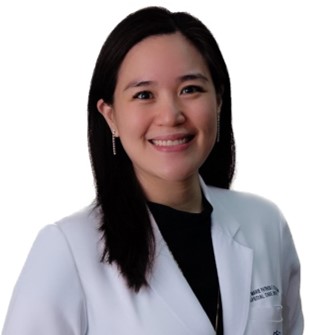
Dr. Co has earned her undergraduate degree in dentistry from the University of the East, Manila and completed her externship training program at the Philippine Children’s Medical Center. She further specialized in Special Care Dentistry, obtaining her Master of Science degree from the Eastman Dental Institute, University College London. Currently, Dr. Co is nearing the completion of her Master of Public Health with major in Lifestyle Medicine at the Adventist University of the Philippines. She brings her experience to both private and hospital settings, where she focuses on the care of pediatric and special needs patients. Beyond her clinical work, Dr. Co dedicated the past four years to the academia, where she handles interdisciplinary and interprofessional approaches to management, as well as management of patients with special needs. She focuses on bridging gaps between healthcare disciplines to optimize outcomes for patients, particularly those with complex medical and dental needs. She is a passionate educator, clinician and advocate for holistic patient care. Her work underscores her dedication to improving the delivery of oral health care for the underserved and special care populations through evidence-based practices and collaborative healthcare strategies.
Lecture Topic: Inter-Professional Collaborative Geriatric Dental Care
As the aging population grows, the need for comprehensive geriatric dental care becomes increasingly critical. This lecture explores the importance of interprofessional collaboration in addressing the complex oral health challenges faced by older adults. We will examine common geriatric dental conditions, their impact on systemic health, and the roles of key healthcare professionals—including dentists, physicians, nurses, pharmacists, and speech-language pathologists—in providing holistic patient care. The session aims to highlight the benefits and barriers to collaboration and present a real-world case study to illustrate effective interdisciplinary strategies. By fostering a team-based approach, we can improve health outcomes and enhance the quality of life for elderly patients.