Plenary Speaker







Prof. Tao Shao - Biography
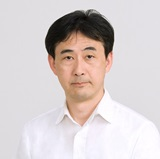
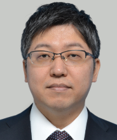
Professor Tao Shao received his Ph.D. degree in electrical engineering from the Graduate University, Chinese Academy of Sciences (CAS), Beijing, China, in 2006. After graduation, he joined the Institute of Electrical Engineering (IEE) at CAS, becoming a professor in 2013. He was also a visiting scholar at the University of New Mexico, USA, from 2011 to 2012. Since August 2024, he has led the Department of High Voltage and Plasma Technology at IEE, CAS. His research focuses on atmospheric-pressure gas discharges and plasma applications driven by pulsed power. He has been an IEEE member since 2010, now a Senior Member, and is a Fellow of the Institution of Engineering and Technology (IET). He has published over 300 papers, including 150+ in international journals. He regularly contributes to major IEEE conferences and serves on editorial boards, including as Associate Editor of IEEE Transactions on Dielectrics and Electrical Insulation. In 2018, he received the William G. Dunbar Award for his contributions to high voltage technology and electrical breakdown phenomena. He has also played a key role in promoting plasma science in China, co-founding the IEEE NPSS Beijing Chapter in 2023, where he served as Vice-Chair. He also chaired the 2024 IEEE International Conference on Plasma Science.
Prof. Patrick J Cullen - Biography
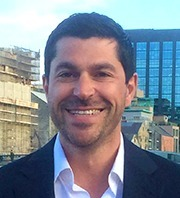
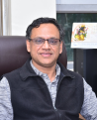
Professor Cullen is an expert in the application of non-thermal plasma technology to industrial & environmental settings. He is Director of Research and Professor of Chemical Engineering at the University of Sydney. Prior to joining the University of Sydney in 2019, he was a professor at the University of Nottingham in the UK. He has also held academic positions at UNSW Sydney and the Technological University Dublin. He has published over 300 journal articles and is designated as a highly cited author by Clarivate Analytics for 2017 - 2023. With over 20 years of experience in chemical & plasma engineering, Professor Cullen has founded a number of successful agricultural and advanced manufacturing companies, including PlasmaLeap Technologies and InnoPharma.
Prof. Heping Li - Biography
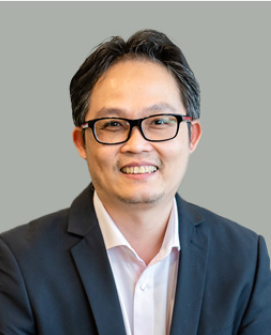
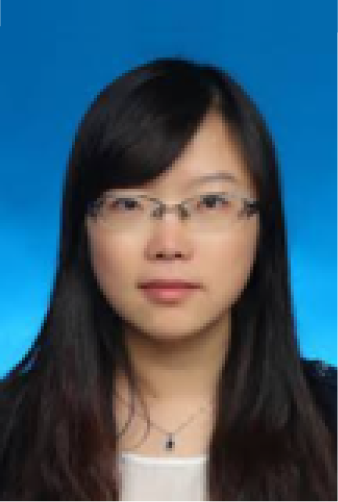
Professor He-Ping Li is the tenured Full Professor of Tsinghua University, Fellows of the Institute of Physics (FInstP), the Institution of Engineering and Technology (FIET) and the Chinese Institute of Electronics (Fellow of CIE), Senior Members of IEEE of USA, China Electrotechnical Society and Chinese Nuclear Society. He has also served as the Editorial Board Members of the journal “Plasma Science & Technology” and “Applied Sciences-Basel”, the Associate Editor of the journal “High Voltage”. He focuses on the fundamental and applied research of non-equilibrium synergistic transports in plasmas. He is the co-author of over 460 journal papers and 57 invited talks in conferences. His research has received over 3900 citations from Google Scholar with H-index of 32. He has been selected as the 2020~2023 “Most Cited Chinese Researchers” by Elsevier. His research has been rewarded the University Science and Technology Award – Second Prize of Natural Science, Ministry of Education of China in 2008, the Gold Medal in the 45th International Exhibition of Inventions of Geneva and the Best International Invention by the National Research Council of Thailand in 2017, and the Technological Invention Prize (First Prize) of China National Light Industry Council in 2019. He has mentored 26 doctoral and master students, and 10 of them have won the Outstanding Degree Thesis Award of Tsinghua University.
Prof. Hyyong Suk - Biography
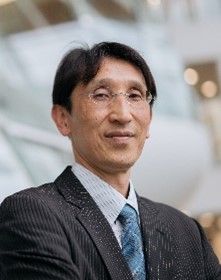
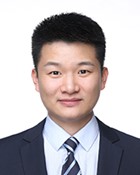
Professor Hyyong Suk received a Ph.D. degree in 1996 from the University of Maryland at College Park, where his main work was focused on space-charge-dominated electron beam dynamics. Then he went to UCLA to work as a postdoctoral researcher and a staff scientist. Here his work was in laser-plasma interactions. After returning back to Korea in 2001, he established a research laboratory for laser-plasma acceleration, THz generation and plasma diagnostics. Recently he published a paper in Nature Photonics and it was about a new idea for laser pulse compression using a density gradient plasma. Now he is working as a professor in Dept. of Physics and Photon Science at GIST (Gwangju Institute of Science and Technology) which is a strong research-oriented university in Korea.
Prof. Xinpei Lu - Biography
Professor Xinpei Lu, Ph.D., has been working with non-thermal plasma for 30 years. His expertise spans the development of novel plasma sources, plasma diagnostics, and applications of plasma in medicine and energy transfer.
Dr. Lu has authored or co-authored over 200 peer-reviewed scientific articles, including two invited papers in Physics Reports, with a total of over 17,500 citations and an H-index of 65. He is also the inventor of twenty patents. As a recognized expert in his field, he has been invited to speak at more than 50 international conferences across the globe, including in the USA, Australia, Germany, South Korea, and other countries.
Dr. Lu has received several prestigious awards, including the Early Career Award of Plasma Medicine from the International Plasma Medicine Society (IPMS), the ChangJiang Scholar Award from China’s Department of Education, and the Outstanding Young Investigator Award from the National Natural Science Foundation of China. He is recognized as a Highly Cited Researcher in the field of non-thermal plasma in China, according to Elsevier. His work has been featured in prominent publications such as Science, Nature, the American Institute of Physics, and the Institute of Physics of the UK.
Prof. Dheerawan Boonyawan - Biography
Professor Dheerawan is former Principal investigator of Plasma & Beam Physics Research Facility (PBP) and TKRCC, Sci & Tech Park (STeP), and former director of Science & Technology Service Center (STSC-CMU), Chiang Mai University, THAILAND. Currently, Dr. Dheerawan is a Chiang Mai University staff. He got his PhD. in Physics (Plasma Physics) in 2001 with certifications in interfacing in Nuclear Experiments 1989, Electron Beam Irradiation Technology 1991, Plasma Physics 1998 and Radiation Engineering and Accelerator Technology 2006. His research interests and activities are mainly in plasma processes and applications to biomaterials. His formerly research center was the Fast Neutron Research Facility which had joint nuclear data for fusion neutronics with Prof. Akito Takahashi, Oktavian intense neutron source facility, Osaka University. He also represents a committee member of Asian Joint Committee for Applied Plasma Science and Engineering (AJC-APSE) and the Asian African Association for Plasma Training (AAATP), associate member of the European Joint Committee (EJC) on Plasma & Ion Surface Engineering (EJC-PISE) and a senior editor of AAPPS Bulletin. His facility members now support internship program for students from France and others. Most of the research work intend to support graduate students for innovation and startup in life science area.
Prof. Zhitong Chen - Biography
Zhitong Chen is a professor at the Institute of Biomedical and Health Engineering, Shenzhen Institute of Advanced Technology, Chinese Academy of Sciences, and holds a joint faculty affiliate appointment at the National Innovation Center for Advanced Medical Devices, China. He did his postdoctoral training in the Plasma and Space Propulsion Lab of Dr. Richard E. Wirz at the University of California, Los Angeles. He received his Ph.D. in Mechanical and Aerospace Engineering from the George Washington University, where he worked under Dr. Michael Keidar. He received his M.Sc. and B.Sc. in Engineering Mechanics at the Institute of Mechanics, Chinese Academy of Sciences, and Mechanical Engineering at Northeast Agriculture University, respectively. His research interests focus on plasma physics, plasma applications, and medical devices. He has published about 50 papers including PNAS, Science Advances, and Materials Today. He is the author of the book “Cold Atmospheric Plasma (CAP) Technology and Applications” (Springer Nature, 2021). He has applied for about 30 patents worldwide and has been granted around 10 patents.
Prof. Koichi Sasaki - Biography
Professor Koichi Sasaki received his PhD degree in 1991 from Nagoya University, Japan, where he worked on the development of infrared and far-infrared lasers with the intention of applying them to fusion plasma diagnostics. After being hired as an assistant professor at Nagoya University in 1991, he changed his research field to basic aspects of low-temperature reactive plasmas. Since becoming a full professor at Hokkaido University in 2010, he has continued his research on low-temperature plasmas. His current research interests include plasma-assisted gas conversion, plasma-liquid interaction, development of plasma diagnostics, and molecular processes in plasmas. He also held the position of program officer at the Japan Society for the Promotion of Science for a time.
Prof. Tomoyuki Murakami - Biography
Tomoyuki Murakami is Professor of Science and Engineering at Seikei University, Tokyo, Japan. He is also Visiting Professor at the Department of Mathematics and Physics, Queen's University, Belfast, NI, UK. He received the B.E. degree from the Tokyo Science University, Chiba, Japan in 1993 and M.E. and Ph.D. degrees from the Tokyo Institute of Technology, Yokohama, Japan, in 1995 and 1998, respectively. His current research interests include theoretical and numerical modeling on multi-phase plasma physics and chemistry and computational biology.
Prof. Ricky Ang Lay Kee - Biography
Professor Ricky Ang Lay Kee is the Associate Provost for International Relations, an Ng Teng Fong Chair Professor and the Programme Director of STEAMunity at SUTD. Prior to this, he has held several significant positions at SUTD, including Head of the Science, Mathematics, and Technology Cluster (2018-2023), Acting Head of Engineering Product Development (2017-2019), Director of Graduate Studies (2015-2017), and PhD Programme Director (2012-2014). His contributions to the University were recognised with the Singapore Public Administration Medal (Bronze) in 2017.
Prof Ang is a fellow of the Institute of Electrical and Electronics Engineers (IEEE), a fellow of the UK Institute of Physics (IOP), a fellow of the International Artificial Intelligence Industry Alliance (AIIA) and an IEEE Distinguished Lecturer. He is also on various advisory boards of journals including the Physics of Plasmas and Nano Express. He is a leading expert in electron emission theory, interface carrier transport, computational nanoelectronics and fractional modelling, with research funded by various agencies in Singapore and the USA. He earned his Bachelor of Science from the National Tsinghua University (Hsinchu) and his Master of Science and PhD from the Nuclear Engineering and Radiological Sciences programme at the University of Michigan. He was also the Los Alamos National Laboratory Director Postdoctoral Fellow in the Applied Physics Division before joining NTU School of Electrical and Electronic Engineering. He has also been ranked Top 2% Scientists (Applied Physics) by Stanford University since 2021, and has been a member of the jury panel (Physical Science) of the Falling Walls Science Breakthrough since 2022.
Prof. Francis Thio - Biography
Professor Francis Thio is currently a professor at ShanghaiTech University, chief scientist and deputy director of the Ultimate Energy Center of ShanghaiTech University. He is a well-known plasma physicist with 37 years of rich experience in scientific research, teaching, scientific research management and policy making. His research areas include fusion energy, high energy density physics, space propulsion, hypervelocity launchers, geophysics and weapons physics. In the field of fusion, he is the originator of the concept of plasma jet magneto-inertial fusion (PJMIF) and played an important role in initiating and promoting the funding of magneto-inertial fusion (MIF) research by the U.S. Department of Energy's Office of Fusion Energy Science (FES) and the Advanced Research Projects Agency-Energy (ARPA-E). He served as a project manager in the U.S. Department of Energy's (DOE) Office of Fusion Energy Science (FES) (2002-2017). From 2017 to 2019, he served as President, CEO and Chief Scientist of HyperJet Fusion Corporation in the United States. In 2019, he served as Chairman of the First International Conference on Innovative Fusion Pathways and Chairman of the International Program Advisory Committee. In 1980, Professor Francis Thio was awarded the first achievement award by the National Defense Science and Technology Organization for his outstanding contribution to the Australian electromagnetic propulsion program. In 1986, he received the "Excellence in Engineering Award" from Westinghouse Electric Company of the United States. In 2001, he proposed the concept of applying compact plasma toroids to high-power plasma drives and took the lead in initiating project research, and received the Special Achievement Award from the National Aeronautics and Space Administration (NASA).
Prof. Kenji-Ishikawa - Biography
Kenji Ishikawa is a Professor of Center for low temperature plasma science (clps), Nagoya University, Japan. His scientific research interests involve plasma-surface interactions in semiconductor processes and cover plasma effects on liquids and living organisms. He holds his Ph.D. in engineering from Tohoku University. He did his research at the plasma laboratory and environmentally benign etching laboratory of the association of super electronics technologies (ASET) (1999-2004). He joined the Nagoya University in 2009 and was promoted to an adjunct professor of the plasma nanotechnology research center (PLANT) of the Nagoya University in 2012. From 2019 to 2020, he was an adjunct professor of the center of plasma nano-interface engineering (CPNE), Kyushu University. Since 2021, he is currently working on plasma science and technology and graduating phD and MS students. He received the 11th Plasma Electronics Award (2013) and the 37th Outstanding Paper Award (2015), of the Japan Society of Applied Physics for work related to the in situ real time analysis of electron spin resonance (ESR) allowing to detection of free radicals on materials and living organisms. He is now engaged also in plasma medicine and plasma agriculture studies. He has published more than 300 papers in refereed international journals and his works cited over 3000 times with h-index of 32. He has also given more than 60 invited talks and holds more than 50 patents. He has served as program chairman of the international symposium of advanced plasma science and its applications for nitrides and nanomaterials and the international conference on plasma nanotechnology and science (ISPlasma/IC-PLANTS)..
Prof. Qiuyue Nie - Biography
Professor Qiuyue Nie is the Vice Dean of School of Electrical Engineering and Automation in Harbin Institute of Technology, Senior member of IEEE. She has also served as the Editorial Board Members of the journal “Plasma Science & Technology” “Chinese Physics Letters” and “Chinese Physics B”. With 20 years of experience in low temperature plasmas and their applications, she has made significant performance in the research on the simulation of the extreme plasma environment, as well as the basic theory and application technology of electromagnetic wave controlled by plasma. She has published more than 70 journal papers, and authorized twenty-five patents. Due to her contribution to studies of plasmas, she has been invited to give talks at more than 20 international conferences, and elected as vice chairman of the Youth Working Committee of China Electrotechnical Society, as well as chairman of 2020 National High Voltage and Discharge Plasma Academic Conference.
Prof. Kazunori Koga - Biography
Professor Kazunori Koga has been engaged in research into the generation and growth mechanisms of fine particles in plasma at Kyushu University. In particular, he has been involved in developing methods to detect fine particles smaller than a nanometer. In particular, he has achieved the following: He developed a "cluster-suppressed plasma CVD method" and succeeded in producing ultra-high quality amorphous silicon thin films at an unprecedented level. For these research results, he received the 10th Applied Physics Society Lecture Encouragement Award in May 2001 and the 3rd Applied Physics Society Plasma Electronics Award in 2005.
Assoc. Prof. Dr. Yangyang Fu - Biography
Dr. Yangyang Fu is currently an Associate Professor with the Department of Electrical Engineering at Tsinghua University, Beijing, China. He received the bachelor’s degree in electrical engineering from Shanghai Jiao Tong University, Shanghai, China, in 2010, and, the Ph.D. degree in electrical engineering from Tsinghua University, Beijing, China, in 2015. From 2016 to 2021, he was a Postdoctoral Researcher with Michigan State University. His research interests lie in gas discharge physics and low-temperature plasmas, with especial focus on electrical breakdown and insulation, radio frequency discharges, and microplasmas. He has authored or co-authored over 100 journal and conference articles in his research field. Dr. Fu was a Committee Member of the 2018 ICOPS NPSS Outstanding Student Paper Award. He was a recipient of the Outstanding Reviewer Award for the IOP journals Plasma Sources Science and Technology (in 2017 and 2020), Plasma Science and Technology (in 2019 and 2020), and as an Exceptional Reviewer for the AIP journal Physics of Plasmas (2020). He also received the Excellent Dissertation Award (first place), the Academic Star Award (finalist), the Excellent Graduate Award from Tsinghua University, the National Scholarship Awarded by the Ministry of Education of the People’s Republic of China, and the Outstanding Student Paper Award (1st Place) at the 42nd IEEE ICOPS in 2015.
Prof. Renwu Zhou - Biography
Dr. Renwu Zhou is currently a professor at Xi’an Jiaotong University, China. His main research background lies in the area of plasma physics and chemistry, and plasma-enabled applications for sustainable production and green processing. He has published over 100 peer-reviewed articles (50 as first-author and/or corresponding author) and many of them are published on high-impacted journals (e.g., Journal of the American Chemical Society, Energy & Environmental Science, Applied Catalysis B: Environment and Energy and Carbon Energy, with more than 5000 citations in Google Scholar. 10 of them are accessed as ESI highly cited papers. He also serves as an associate editor of Modern Low Temperature Plasma and is selected in Top 2% of Scientists on Stanford List from 2022-2024.
Total Visits : 21485